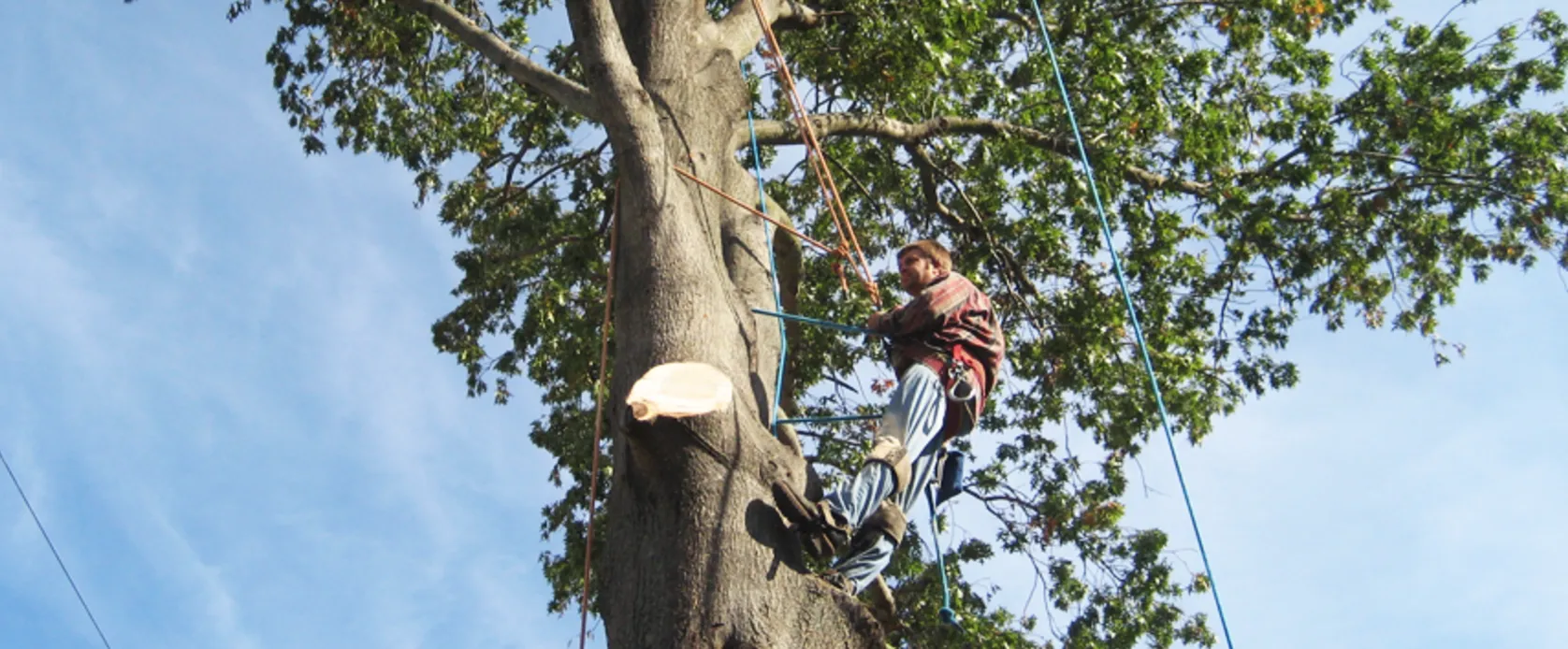
Tree Trimming & Pruning in Mooresville
Expert tree trimming for Mooresville — solving silver maple failures, construction-stressed canopies, and pin oak decline across northern Morgan County.
$20 OFF Your Service
Submit the form to claim your discount. Mention this offer when we call to confirm your estimate. Valid for all Mooresville properties.
The Fastest Way to Get Your Quote
Submit the form and we'll dispatch an estimator to your Mooresville property — that's our promise.
It's easier for everyone. We might be up in your neighbor's tree. The form gets us your info so we can schedule your estimate right away.
Prefer to call? We're here at (812) 432-2013
Get Your Quote in 24 Hours
Fill this out and we'll send an estimator to your Mooresville property.
Why Mooresville Trees Need Frequent Professional Pruning
Mooresville sits in northern Morgan County along the SR-67 and I-70 corridor, right at the edge of Indianapolis's expanding southern suburbs. The community has grown rapidly over the past decade, and that growth has created a tree care environment defined by two distinct challenges: new subdivisions where young trees need structural training, and established neighborhoods where mature canopy species — particularly silver maple — demand ongoing management to stay safe.
The species mix in Mooresville is different from what we work with in the hill country to the south. Mooresville's flatter terrain, deeper soils, and more urban character mean that the dominant landscape trees are species that were planted rather than naturally occurring. Silver maple, pin oak, red maple, and ornamental varieties are the most common trees in Mooresville's residential areas. Each of these species has specific structural tendencies that make professional pruning more important here than in communities dominated by the naturally stronger native oaks and hickories.
Silver maple is everywhere in Mooresville. It was planted extensively throughout Morgan County in the 1970s and 1980s because it grows fast and provides shade quickly. But silver maple is one of the most structurally unreliable large shade trees in the eastern United States. It develops included bark at nearly every branch union, produces brittle wood that snaps in moderate wind, and grows so fast that its canopy outpaces its structural capacity within 20 to 30 years. A mature silver maple in Mooresville is a tree that needs professional pruning every three to four years — not because it is growing into the house, but because it is actively developing the structural defects that cause catastrophic failure.
The flatter terrain in Mooresville does offer one advantage for tree work: full equipment access. Unlike Brown County's steep slopes or Spencer's remote rural lots, Mooresville properties can typically be reached by bucket trucks, crane trucks, and full-size chippers. This means faster, more efficient work and lower costs for property owners. We bring the right equipment for the job, and in Mooresville, that equipment can usually reach every tree on the property.
Silver Maple Management in Mooresville
Silver maple deserves its own section because it is the single most common source of tree-related property damage calls we receive from Mooresville and northern Morgan County. Understanding why this species fails — and what pruning can and cannot do about it — is essential for any Mooresville property owner with silver maples on their lot.
Silver maple's fundamental problem is its branch architecture. The species naturally produces multiple competing leaders with narrow, V-shaped unions. Where those leaders meet, bark grows inward between them — a condition called included bark — rather than forming the interlocking wood fibers that create a strong branch union. As the tree grows, the included bark acts as a wedge, gradually forcing the leaders apart. Eventually, the union splits. When a 40-foot leader with a 12-inch trunk diameter separates from the main stem, whatever is below — your car, your roof, your children — takes the hit.
Pruning cannot retroactively fix a mature silver maple's fundamental architecture. What pruning can do is manage the risk. Crown thinning reduces wind load so the tree is less likely to fail during storms. Weight reduction on overextended leaders lessens the leverage acting on compromised branch unions. Deadwood removal eliminates the brittle branches that break first and fall farthest. And in younger silver maples — under 15 years old — structural pruning can still establish a dominant leader and remove competing stems before they become permanent liabilities.
For mature silver maples in high-risk positions — directly over the house, over the deck, over the driveway — we provide an honest assessment. Sometimes pruning can reduce the risk to an acceptable level for several more years. Sometimes the tree's structural condition has deteriorated to the point where removal and replacement with a stronger species is the right call. We give you the information to make that decision, and we respect whatever you decide.
Silver maple also produces aggressive surface roots that buckle sidewalks, invade sewer lines, and make mowing difficult. These root issues are not solved by pruning, but they are relevant context. A tree that is both structurally unreliable in the canopy and causing root damage below grade may have reached the end of its useful life on your property, and a phased replacement plan — removing the silver maple and planting a structurally superior species like swamp white oak or red oak — creates a better outcome over the next 10 to 20 years.
Pruning Construction-Stressed Trees in Mooresville's New Subdivisions
Mooresville's ongoing residential development means that new subdivisions are being carved out of farmland and light woodland throughout the SR-67 corridor and east of town. When developers preserve existing trees on these lots — as many Mooresville builders are now doing to increase property appeal — those trees often sustain damage during the construction process that is not immediately visible.
Root zone compaction is the most common and most damaging form of construction stress. Heavy equipment driving over the root zone — which extends well beyond the drip line of the canopy — compresses soil pores, eliminates air space, and destroys the fine feeder roots that absorb water and nutrients. A tree can survive for two to three years on stored energy and existing root structure after severe compaction, then begin a steady decline as the damaged root system fails to keep pace with the canopy's demands.
Grade changes are another frequent problem. Adding even 4 to 6 inches of fill soil over the root zone can suffocate roots by cutting off gas exchange. Removing soil from the root zone during grading exposes and severs roots. Both conditions compromise the tree's ability to support its existing canopy, and the symptoms — thin foliage, early leaf drop, dieback starting at branch tips — may not appear until the new homeowner has been living on the property for a year or more.
Pruning is one of the most effective tools for helping construction-stressed trees survive. By reducing the canopy through conservative crown thinning — removing 15 to 20 percent of the live canopy — we bring the tree's above-ground demand into closer alignment with its compromised below-ground capacity. This buys time for the root system to regenerate and re-establish in the compacted soil, which can take three to five years depending on species and soil conditions.
We also recommend root zone care in conjunction with pruning for construction-stressed trees. Vertical mulching or air spading the compacted root zone restores soil structure and allows new root growth. Combined with conservative canopy reduction through pruning, this integrated approach gives construction-stressed trees in Mooresville's new developments the best possible chance of long-term survival.
Trees that were planted after construction — as opposed to preserved during it — need structural pruning within their first three to five years. Builders typically install landscape trees at 2- to 3-inch caliper, and many of these trees arrive from the nursery with structural defects: co-dominant stems, crossing branches, or improper pruning cuts from the nursery that have started to decay. Correcting these issues early is fast, inexpensive, and prevents the defects from becoming permanent liabilities.
Pin Oak Care and Iron Chlorosis in Mooresville
Pin oak is a popular landscape tree in Mooresville and throughout the Indianapolis suburbs. It grows into a handsome pyramidal form, provides excellent shade, and tolerates the wetter soils found in some of Mooresville's low-lying areas. But pin oak has a specific vulnerability that is widespread in this part of Morgan County: iron chlorosis.
Iron chlorosis is a nutrient deficiency caused not by a lack of iron in the soil, but by the soil's alkaline pH preventing the tree from absorbing available iron. Much of the soil in Mooresville's developed areas has been influenced by limestone aggregate used in road construction, foundation work, and utility trenching. This raises the soil pH above 7.0 — into the alkaline range where pin oaks cannot efficiently extract iron from the soil. The result is interveinal chlorosis: leaves turn yellow between the veins while the veins themselves stay green. In severe cases, leaves turn almost white, branch tips die back, and the tree enters a slow decline.
Pruning alone does not solve iron chlorosis, but it plays a supporting role in the overall management strategy. Removing dead and declining branches from a chlorotic pin oak prevents those branches from becoming hazard wood that falls unpredictably. Conservative crown thinning reduces the canopy's total demand on the compromised root system, giving the tree a better chance of supporting the foliage it retains with the limited iron it can absorb. Removing branches that are already too far gone — those producing no leaves or only sparse, severely chlorotic foliage — redirects the tree's resources to the healthier portions of the canopy.
Pin oaks also have a characteristic growth habit that requires pruning attention: they retain dead lower branches for years, creating a dense, twiggy lower canopy that looks messy and scrapes against anything nearby. Regular removal of these persistent dead lower branches — a maintenance task rather than a structural intervention — keeps pin oaks looking clean and prevents the minor but constant nuisance of dead twigs falling on cars, sidewalks, and lawns.
For Mooresville properties with pin oaks showing early chlorosis symptoms, we recommend an integrated approach: pruning to manage the canopy and remove decline, combined with soil amendment or trunk injection treatments that address the underlying iron availability problem. We can coordinate both services or refer you to a plant health care specialist if the chlorosis requires treatment beyond our standard pruning scope.
Mooresville's Professional Tree Trimming Team
Bloomington Tree Service Pros extends ISA-certified tree trimming services to Mooresville and all of northern Morgan County. We understand the specific species challenges in this community — the silver maple structural failures, the construction stress on preserved trees, the pin oak chlorosis — and we bring the knowledge and equipment to address them properly.
Our pruning follows ANSI A300 Part 1 standards. We cut at the branch collar. We do not top trees. We do not apply wound sealant. We limit canopy removal to no more than 25 percent per visit on mature specimens. These practices are not arbitrary — they are the evidence-based standards that protect your trees from the long-term damage caused by improper pruning.
We never recommend unnecessary work. If your trees are healthy and structurally sound, we will tell you so and suggest an appropriate interval for the next assessment. If a tree has problems that pruning cannot solve — a silver maple with catastrophic included bark, a pin oak in terminal decline from chlorosis — we will tell you that too, and discuss the alternatives honestly.
Our crews carry full general liability and workers' compensation insurance on every Mooresville job. We provide free on-site estimates for residential and commercial properties throughout Morgan County. Mooresville's flat, accessible terrain means our full range of equipment — bucket trucks, cranes, and large-capacity chippers — can reach most properties, allowing us to work efficiently and keep your costs reasonable.
Call us at (812) 432-2013 to schedule your free estimate. We are 40 minutes from Mooresville and maintain a regular service schedule in northern Morgan County year-round.
Our Tree Trimming & Pruning Service Includes
- Structural pruning for young trees to establish a dominant leader and balanced scaffold branches
- Crown thinning to improve light penetration and air circulation without over-pruning
- Crown raising to provide clearance over rooflines, driveways, and pedestrian areas
- Deadwood removal — all dead, dying, and broken branches removed from the canopy
- Oak wilt prevention scheduling: oak pruning timed outside the April–July high-risk window
- Species-specific timing for maples, sycamores, tulip poplars, and fruit trees
- Vista pruning to open sightlines while preserving tree health and canopy structure
- Fruit tree renewal pruning to maximize yield and manage size in home orchards
Other Tree Services in Mooresville
Need Tree Trimming & Pruning in Mooresville?
Fill out the form at the top of this page to claim your $20 discount and get a free on-site estimate from our ISA-certified team.