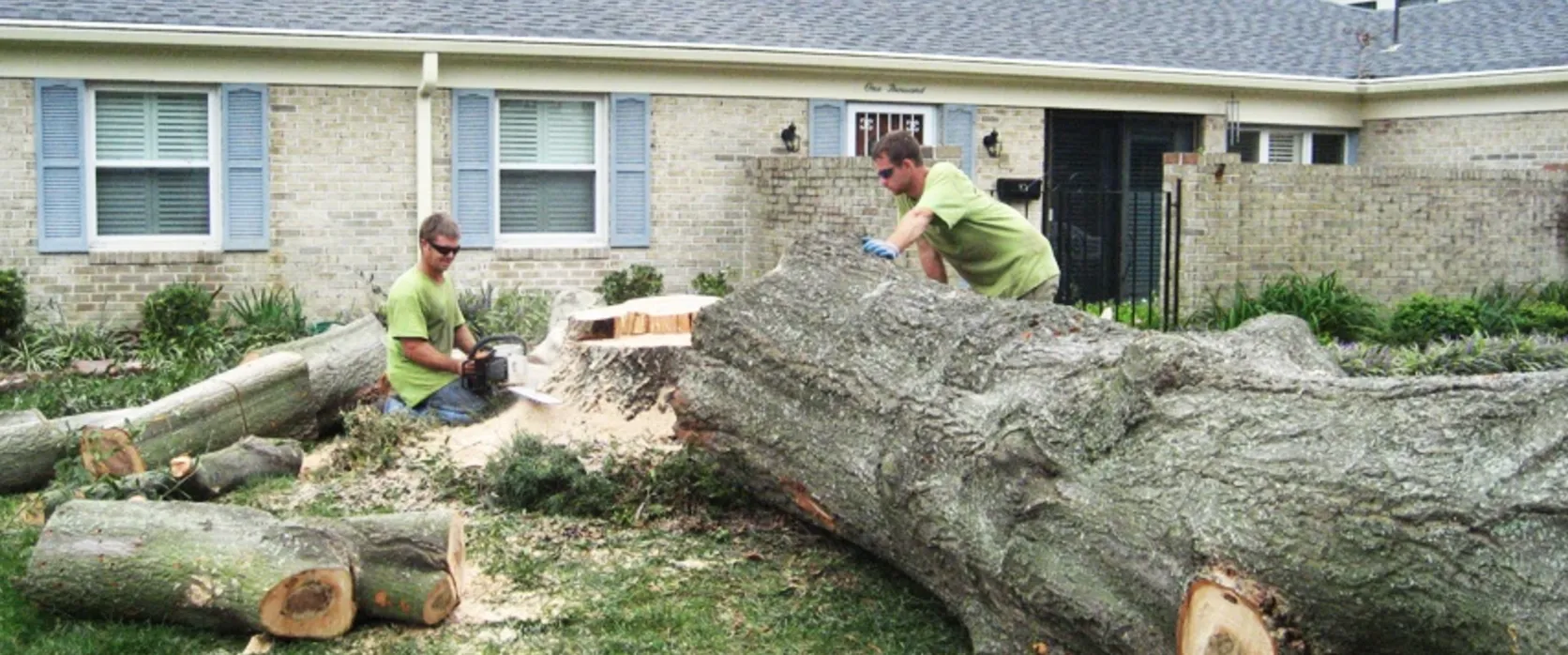
Tree Removal in Bloomington
Safe, efficient tree removal Bloomington IN homeowners and property managers trust for hazardous, dead, or unwanted trees. We serve all of Monroe County using professional-grade equipment and proven safety protocols.
$20 OFF Your Service
Submit the form to claim your discount. Mention this offer when we call to confirm your estimate.
The Fastest Way to Get Your Quote
Submit the form and we'll dispatch an estimator to your property — that's our promise.
It's easier for everyone. We might be up in your neighbor's tree. The form gets us your info so we can schedule your estimate right away.
Prefer to call? We're here at (812) 432-2013
Get Your Quote in 24 Hours
Fill this out and we'll send an estimator to your property.
Tree Removal in Bloomington, Indiana
If you need tree removal in Bloomington IN, the team at Bloomington Tree Service Pros is ready to help. We are ISA-certified arborists, fully licensed and insured, serving homeowners and property managers throughout Monroe County and the surrounding area. Whether you are dealing with a dead oak threatening your roofline, a storm-damaged maple leaning toward a fence, or simply a tree that needs to come down to make room for a new project, we handle every job with the skill and care your property deserves. Call us today at (812) 432-2013 for a free on-site estimate with no obligation.
Tree removal in Bloomington is not a one-size-fits-all job. The hardwood forests of south-central Indiana include some of the largest and most structurally complex trees in the Midwest. Combined with the region's clay-heavy soils, limestone karst geology, and seasonal ice storms, our crews routinely encounter conditions that demand experience, proper equipment, and a carefully planned approach. This guide walks you through everything you need to know about tree removal in Bloomington, Indiana — from recognizing when a tree must come down to understanding what the job will cost.
When Tree Removal Is Necessary in Bloomington
Not every problem tree needs to come down. A skilled ISA-certified arborist will always look for ways to preserve a tree before recommending removal. That said, there are clear situations where removal is the right call — and waiting only makes the job more expensive and more dangerous.
The most common reason Bloomington homeowners call us is storm damage. Monroe County averages two to four significant ice events each winter, and severe thunderstorms roll through in spring and summer with enough force to split large limbs or topple entire trees. When a tree has lost major structural support or is actively leaning toward a building, removal is usually the safest path forward.
Dead and dying trees are another major concern. Once a tree loses its root-to-crown vascular function, the wood begins to dry and crack unpredictably. Dead ash trees — a widespread issue across Bloomington due to the emerald ash borer infestation that has devastated Monroe County's ash population over the past 15 years — are especially dangerous. Ash wood becomes brittle quickly and can shed large limbs without any warning, even on a calm day.
Other situations that commonly require tree removal include:
• Trees with significant trunk cavities or internal decay that compromises structural integrity
• Trees leaning more than 15 degrees from vertical, particularly after a storm or extended wet weather
• Root damage caused by construction, utility trenching, or driveway installation near the root zone
• Fungal growth or mushroom clusters at the base of the trunk, indicating advanced internal rot
• Trees that have outgrown their location and are threatening foundations, sewer lines, or neighboring structures
• Chronic disease or pest infestation that has progressed beyond effective treatment options
If you are unsure whether your tree needs to come down, a professional assessment costs far less than waiting for storm damage to settle the question. Our arborists provide honest evaluations and recommend removal only when it is genuinely the right answer.
Common Tree Species We Remove in Monroe County
Monroe County's native forests are dominated by large-canopy hardwoods. These trees are beautiful and ecologically valuable, but their size and structural characteristics mean removal requires specific knowledge and the right equipment for each species.
White Oak and Red Oak: White oaks and red oaks are the most common large-canopy species in Bloomington's established neighborhoods — Prospect Hill, Elm Heights, Bryan Park — and throughout the wooded properties of Monroe County. These trees routinely reach 80 to 100 feet in height with massive lateral root systems. Removing a large oak near a home or driveway almost always requires sectional rigging or crane assistance to avoid damaging the surrounding property.
Sugar Maple: Sugar maple is a beloved shade tree throughout Bloomington, prized for its brilliant fall color and generous summer canopy. Mature sugar maples develop significant lateral spread, and their shallow root systems make them susceptible to damage from nearby construction. When a sugar maple is stressed or diseased, it can decline rapidly. Removal requires careful planning given how wide and heavy a full maple canopy can be.
Shagbark Hickory: Shagbark hickory is common in the wooded ravines and hillsides surrounding Bloomington. Hickory wood is exceptionally dense and heavy, which makes removal more demanding than equivalent-sized oaks or maples. Proper rigging and careful sectioning are critical with hickory to manage the weight of individual pieces as they are lowered to the ground.
Tulip Poplar: Tulip poplar is Indiana's tallest native tree and one of the fastest-growing hardwoods in the region. It is found throughout Monroe County and in many Bloomington neighborhoods. While tulip poplars grow quickly, they are also prone to surface root issues and can develop structural weaknesses in the upper crown, particularly after ice loading. Their height means that removals near structures frequently benefit from crane equipment.
Ash Trees with Emerald Ash Borer Damage: The emerald ash borer has eliminated the vast majority of ash trees across Monroe County. Dead ash trees present a unique hazard: the wood deteriorates faster than most other hardwood species, becoming dry and structurally unpredictable within one to two seasons. We use ground-based rigging, aerial lifts, and cranes rather than sending a climber up a confirmed ash borer snag. If you have a dead or visibly declining ash on your property, it should be evaluated and addressed soon.
Our Tree Removal Process in Bloomington
Every tree removal begins with a thorough on-site assessment. Before any equipment arrives, one of our ISA-certified arborists walks the property to evaluate the tree's condition, available drop zones, proximity to structures and utility lines, and soil conditions around the root zone. This assessment shapes every decision that follows.
Step 1 — Site Assessment and Planning: Our arborist evaluates the tree's lean, root plate integrity, and any visible signs of internal decay or structural weakness. We identify overhead utilities, map out equipment access routes, and determine whether a conventional felling, sectional rigging, or crane-assisted approach best fits the situation. For trees near the IU campus utility corridors or in tight residential lots, this planning step is critical to a safe and clean outcome.
Step 2 — Crew Setup and Safety Perimeter: On the day of removal, our crew establishes a safety perimeter around the work zone. Equipment is positioned, personal protective gear is inspected, and the team reviews the plan together before any cutting begins. We follow ANSI A300 tree care standards and ANSI Z133 safety requirements on every job.
Step 3 — Sectional Rigging or Conventional Felling: For trees in an open yard with a clear drop zone, a conventional directional fell is often the most efficient method. The tree is brought down in one controlled movement using a precisely placed notch-and-back-cut technique that determines the direction of fall.
For trees near structures, vehicles, fences, or landscaping features, we use sectional rigging. This involves working from an aerial lift or climbing the tree to remove the canopy in controlled sections. Each piece is lowered to the ground using ropes, pulleys, and mechanical advantage systems. Nothing falls freely — every section is guided down deliberately to protect what is below.
For the largest trees, or jobs where ground access is extremely limited, we bring in a crane. Crane-assisted removal allows us to lift entire sections of a large tree over a home or other obstacle and set them down in a clear area. It is the most efficient method for complex removals and often causes less disturbance to the surrounding landscape than other techniques.
Step 4 — Stump Grinding: After the trunk and branches are removed, you will have a stump at or near grade. Stump grinding is available as part of the same service or quoted separately. Our grinder takes the stump down 8 to 12 inches below grade, eliminating any tripping hazard and preparing the area for replanting, lawn repair, or a patio installation.
Step 5 — Debris Cleanup and Final Walkthrough: We leave your property clean. All wood, brush, and chipped material is removed from the site, or — if you prefer — chips can be left as landscape mulch. We rake the work zone and do a final walkthrough with you before the crew departs. If your removal is related to storm damage and you are filing an insurance claim, we provide complete photographic documentation and a written work summary to support your claim.
Tree Removal Cost in Bloomington IN
The cost of tree removal in Bloomington Indiana varies based on the tree's size, species, location on the property, and the complexity of the removal. Any company that gives you a precise quote over the phone without seeing the tree is guessing. That said, here are honest general ranges to help you plan your budget.
• Small trees (under 30 feet): $350 to $700. This category includes ornamental trees, younger maples and redbuds, and smaller understory trees in accessible, open locations.
• Medium trees (30 to 60 feet): $700 to $1,400. This covers most mature ornamental trees, mid-size oaks and maples, and trees in moderately complex locations.
• Large trees (60 to 80 feet): $1,200 to $2,000. This range applies to mature hardwoods in average conditions with a workable drop zone and reasonable access.
• Extra-large trees (80+ feet or complex location): $1,800 to $2,500 or more. Large oaks or tulip poplars hanging over a structure, trees requiring crane assistance, or jobs with severely limited access fall into this range.
Several factors can move a job toward the higher end of its range. Proximity to the home or utility lines, no clear drop zone requiring full sectional rigging, the need for crane equipment, brittle wood from emerald ash borer damage, and stump grinding can all affect the final price. Permit requirements in certain Bloomington zoning districts may add a modest fee as well.
We recommend comparing two or three estimates for any significant job. A low price from a company without proper insurance is not a bargain — if an uninsured crew damages your property or a worker is injured on your land, you could be held liable. Always verify that any tree service you hire carries full general liability and workers' compensation insurance. We carry both and provide certificates of insurance on request.
To get an accurate tree removal cost estimate in Bloomington, call us at (812) 432-2013. We provide free on-site estimates throughout Monroe County with no pressure and no obligation.
Emergency Tree Removal in Bloomington
Emergency tree removal in Bloomington is available when a tree or major limb has fallen or is in imminent danger of falling on a structure, vehicle, or utility line. We understand that tree emergencies do not wait for business hours, and our team is available to respond when you need help most.
Common emergency situations our crews handle in Bloomington include:
• Trees uprooted or split during severe thunderstorms or straight-line wind events
• Large limbs dropped onto a roof, vehicle, fence, or power line
• A tree leaning dangerously after ice loading shifts its root plate
• A dead or structurally compromised tree that has partially failed and is at risk of full collapse
Monroe County's clay-heavy soils become saturated quickly during spring rain events, dramatically reducing root anchorage for already-stressed trees. Our arborists know how local soil conditions interact with tree stability, which allows us to quickly assess whether a compromised tree is a true emergency requiring same-day response or can be safely scheduled within a few days.
If you are dealing with an active emergency, call us directly at (812) 432-2013. Do not attempt to move a fallen tree or large limb that is resting against a structure until a professional has evaluated the situation. Disturbing a tree in contact with a roof or wall can shift weight in unpredictable and dangerous ways.
Tree Removal Permits and Regulations in Bloomington, IN
The City of Bloomington has specific regulations governing tree removal, and understanding them before you start can save you time and prevent unnecessary fines. Requirements vary depending on the tree's location, its size, and the zoning classification of the property.
Trees growing in the public right-of-way — the strip of land between the sidewalk and the street curb — are city property. Removing or significantly altering one requires a permit from the City of Bloomington Parks and Recreation Department. Homeowners and contractors are equally subject to this requirement, and replacement planting may be required as a condition of permit approval.
On private property, permit requirements depend on the zoning district and, in some cases, the size and species of the tree. Properties in certain overlay zones, floodplain areas, or adjacent to Monroe County public land may face additional review. Indiana University's campus areas have their own internal review processes for trees within their boundaries.
As a licensed tree removal service in Bloomington, we handle permit coordination as part of our standard process. During your estimate, we identify any applicable permit requirements, pull the necessary paperwork, and manage the process from start to finish. You do not have to navigate the city's permitting system on your own.
Removing a regulated tree without the required permit can result in fines and mandatory replacement planting at your expense. If you are unsure whether a permit applies to your situation, reach out before any cutting begins — we will give you a straight answer at no charge.
What's Included
- Full hazard assessment including lean, root plate health, and proximity to structures or utility lines
- Crane-assisted removal for trees in tight spaces, over structures, or with no clear drop zone
- Sectional rigging and lowering for controlled piece-by-piece removal near fences, cars, and landscaping
- Emerald ash borer snag removal using specialized protocols for brittle, unpredictable dead wood
- Complete stump grinding to 8–12 inches below grade included or quoted separately as needed
- Thorough debris cleanup — all wood, brush, and chips hauled away or left as mulch on request
- City of Bloomington and Monroe County permit coordination handled by our team
- Insurance documentation and photo evidence prepared for homeowner insurance claims
Key Benefits
- Eliminate immediate safety hazards before ice storms or severe spring weather strikes
- Protect your home, garage, and vehicles from catastrophic falling-tree damage
- Remove structurally compromised ash borer snags that become more dangerous every season
- Clear space for additions, garages, fences, pools, or landscaping projects
- Increase sunlight to lawn and garden areas shaded by overgrown canopy
- Prevent root damage to foundations, sewer lines, and underground utilities
- Improve curb appeal and property value by eliminating dead or diseased trees
- Gain peace of mind knowing the job is done safely by ISA-certified professionals
Tree Removal Service Areas
We provide tree removal services throughout Bloomington and the surrounding communities:
Frequently Asked Questions
How do I know if my tree needs to be removed or just trimmed?
The key question is structural integrity. Trimming can address dead branches, shape a canopy, or remove isolated problem limbs — but it cannot fix advanced internal decay, a compromised root system, or a trunk that has lost structural strength. If your tree has multiple warning signs, an honest assessment from an ISA-certified arborist in Bloomington is the most reliable way to know which option is appropriate. We evaluate both possibilities on every visit and recommend removal only when it is genuinely the safer or more practical choice.
How long does tree removal take?
Most residential tree removals in Bloomington are completed in a single day. A small to medium tree in an open, accessible location typically takes two to four hours. A large oak or tulip poplar near a structure — especially one requiring crane equipment or full sectional rigging — may take a full day or more. We give you a realistic time estimate during your free on-site assessment so you can plan accordingly.
Do I need to be home during the removal?
We ask that someone be available at the start of the job to confirm the plan, point out any concerns, and answer questions from the crew. After the initial walkthrough, you do not need to remain on-site. We will contact you when the work is complete for a final walkthrough before the crew leaves your property.
Will tree removal damage my lawn or garden beds?
We take specific precautions to protect your property during every job. Ground protection mats are used over lawn areas where equipment must travel. Access routes are planned to minimize soil compaction and turf damage. In most cases, the area immediately around the stump is the only spot showing visible disturbance after the job is done, and that is addressed as part of cleanup.
What happens to the wood and debris after removal?
All brush, wood sections, and chipped material are removed from your property and hauled away as a standard part of our service. If you would prefer to keep the firewood from a hardwood removal, we can cut the trunk into rounds and stack them at a convenient location on your property. Chipped brush material can also be left as mulch if you have a use for it. Let us know your preference at the time of your estimate and we will plan accordingly.
Is Bloomington Tree Service Pros fully insured?
Yes. We carry full general liability insurance and workers' compensation coverage on every job we perform. Certificates of insurance are available on request and can be provided to lenders, property managers, or HOA boards as needed. Tree removal involves genuine hazards, and working with an uninsured company creates financial risk for you as the property owner. We encourage every homeowner in Bloomington to verify insurance coverage before hiring any tree service.
Can you help document my storm damage for an insurance claim?
Yes. We routinely assist Bloomington homeowners with insurance claims following storm events. We provide detailed before-and-after photographs, written descriptions of work performed, and any supporting documentation your carrier requests. If you are filing a claim, let us know when you call so we can capture the right information from the beginning. Reach us at (812) 432-2013 and mention your insurance situation when you schedule your estimate.
Do you offer tree removal in Buffington or just Bloomington?
We serve all of Bloomington, IN and Monroe County. If you searched for "tree removal Buffington" — a common misspelling and voice-search variant of Bloomington — you are in the right place. Our crews cover the entire Bloomington area, so whether you typed Bloomington or Buffington, we can help with your tree removal. Call (812) 432-2013 for a free on-site estimate.
Ready for Tree Removal?
Fill out the form at the top of this page to claim your $20 discount and get a free on-site estimate from our ISA-certified team.
Prefer to call?
We're happy to talk through your tree removal project on the phone.
Fully Insured
For your peace of mind
Fast Response
We value your time