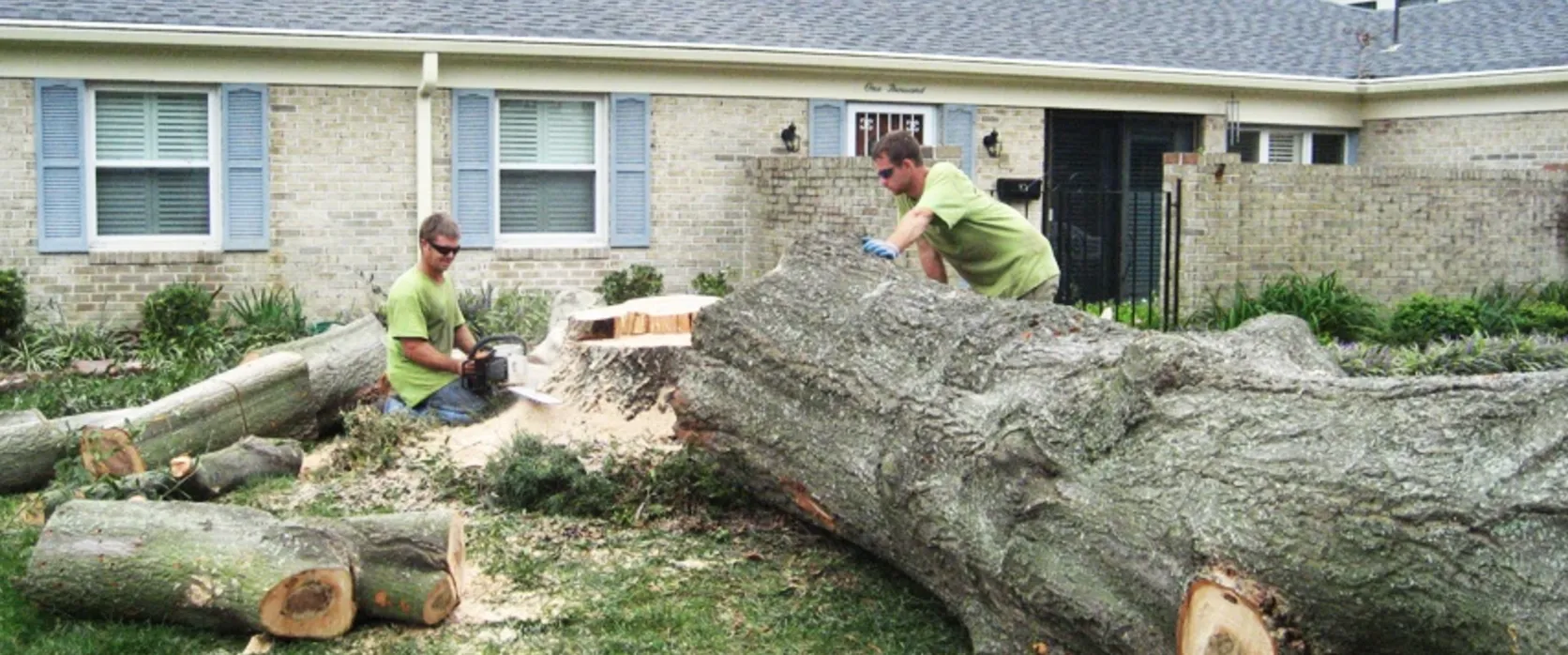
Tree Removal in Mooresville
Professional tree removal for Mooresville — addressing silver maple failures, construction stress, and rapid suburban growth.
$20 OFF Your Service
Submit the form to claim your discount. Mention this offer when we call to confirm your estimate. Valid for all Mooresville properties.
The Fastest Way to Get Your Quote
Submit the form and we'll dispatch an estimator to your Mooresville property — that's our promise.
It's easier for everyone. We might be up in your neighbor's tree. The form gets us your info so we can schedule your estimate right away.
Prefer to call? We're here at (812) 432-2013
Get Your Quote in 24 Hours
Fill this out and we'll send an estimator to your Mooresville property.
Silver Maple Problems Driving Tree Removal in Mooresville
If there is one tree species that defines Mooresville's tree removal workload, it is silver maple. Planted extensively throughout northern Morgan County during the 1950s through 1970s as a fast-growing shade tree, silver maple delivered on its promise of quick canopy — and is now delivering on its structural liabilities as those trees reach maturity.
Silver maple grows fast because it invests in rapid wood production rather than dense, strong wood. The result is a large tree with inherently brittle branches, a strong tendency toward co-dominant stem formation, and a growth habit that produces included bark at nearly every major branch union. Included bark is bark tissue trapped inside the junction between two stems or branches, preventing the wood fibers from interlocking. Instead of a solid structural joint, you get two pieces of wood pushing against each other with a layer of bark acting as a slip plane between them. When wind loads the canopy or ice adds weight, included bark unions are where failure begins.
Mooresville's older residential areas along Indianapolis Road, Main Street, and the streets surrounding the town center are lined with mature silver maples. Many of these trees have trunk diameters exceeding 30 inches and canopy heights above 60 feet. At this size, a silver maple limb failure drops hundreds of pounds of wood from a significant height — enough to total a vehicle, punch through a roof, or pull down a utility service drop.
We assess silver maples in Mooresville on a case-by-case basis. Some can be managed through risk-reduction pruning — removing the most structurally compromised limbs, reducing canopy weight on the weakest unions, and installing dynamic cabling to redistribute load. Others have accumulated so many structural defects that no amount of pruning will bring the risk to an acceptable level. For these trees, removal is the honest recommendation, and we explain exactly why so the property owner can make an informed decision.
Construction Stress and Preserved Trees in Mooresville Subdivisions
Indianapolis' southern suburbs are expanding steadily into Mooresville and the surrounding area along the SR-67 and I-70 corridors. New residential developments are being built on formerly agricultural and wooded land, and developers frequently preserve select mature trees to enhance the appeal of finished lots. The intention is good — a 50-year-old red oak in a front yard is a genuine asset to a new home. But the reality of construction often undermines those preserved trees in ways that are not immediately visible.
Construction damage to trees is a delayed-reaction problem. During the building process, heavy equipment compacts the root zone, grade changes bury or expose roots, utility trenching severs major lateral roots, and the soil chemistry may shift as fill material is imported. The tree does not die immediately. It draws on stored energy reserves for one to three years, continuing to leaf out and appear healthy while its compromised root system slowly fails. By year three to five, the canopy begins thinning, dead limbs appear in the upper crown, and leaf size noticeably decreases. By year five to seven, the tree may be in irreversible decline.
We see this pattern regularly in Mooresville's newer subdivisions. A homeowner who moved into a new home three or four years ago now has a large tree in the yard that is visibly declining and wants to know if it can be saved. Sometimes it can — deep root fertilization, soil decompaction with compressed air, and supplemental watering during drought periods can help a tree recover if the root damage was moderate. But if the damage was severe — if more than 40 percent of the root zone was compacted, severed, or buried — the tree may be too far gone.
Our arborists can evaluate construction-stressed trees in Mooresville and provide an honest prognosis. When removal is the right call, we handle it promptly before the tree's declining root system fails on its own terms and drops a 60-foot tree onto a house, a car, or a person. Proactive removal of a declining tree is always safer and less expensive than emergency removal after an uncontrolled failure.
Pin Oak Iron Chlorosis and Declining Canopy in Mooresville
Pin oak is one of the most commonly planted shade trees in central Indiana, and Mooresville's residential areas have a substantial population of them. Unfortunately, pin oaks are highly sensitive to soil pH, and the alkaline soil conditions that prevail across much of northern Morgan County create a chronic problem: iron chlorosis.
Iron chlorosis occurs when soil pH is above approximately 7.0, which locks iron into chemical forms that plant roots cannot absorb. Pin oaks are obligate acidophiles — they require acidic soil to take up iron effectively. When iron availability drops, the tree cannot produce sufficient chlorophyll, and the result is visible as interveinal chlorosis — leaves with yellow tissue between green veins, particularly on the newest growth at the branch tips. In mild cases, the tree looks stressed but persists. In severe or prolonged cases, branches begin dying back from the tips, the canopy progressively thins over several years, and the tree eventually reaches a point where it can no longer sustain itself.
We see pin oaks throughout Mooresville in various stages of this decline. Trunk injections of chelated iron can green up chlorotic pin oaks for one to three growing seasons, and soil acidification treatments with elemental sulfur can shift root zone pH downward over time. But these are maintenance treatments, not cures — the underlying alkaline soil remains, and the treatments must be repeated on a regular schedule to keep the tree viable.
For pin oaks that have progressed to advanced decline — significant crown dieback, heavily reduced canopy density, and weak annual growth — the cost of indefinite treatment may exceed the tree's remaining value. In these cases, removal and replacement with a species better suited to Mooresville's alkaline soil is the more practical path. Swamp white oak, bur oak, and hackberry are all excellent shade tree alternatives that tolerate alkaline conditions and thrive in the soils of northern Morgan County. We can advise on replacement species during the removal estimate so you have a clear path from the declining tree to a long-term replacement that will not face the same problem.
Full Equipment Access on Mooresville's Accessible Terrain
One significant advantage of tree removal in Mooresville compared to other parts of our service area is terrain accessibility. Northern Morgan County is substantially flatter than the Brown County Hills to the southeast or the rolling karst terrain south of Bloomington. Mooresville properties generally have firm, level ground, wide streets, and driveways that can accommodate our full range of equipment without the access constraints that complicate work in hillier areas.
This terrain advantage translates directly into efficiency and cost. When a crane can set up on a Mooresville street without concern about slope, soft ground, or overhead obstructions, crane-assisted removal becomes a highly efficient option even for moderately sized trees. The crane picks each section as the climber makes the cut, lifts it clear of the house and utility lines, and sets it in the street for processing. A 70-foot tree that might require four or five hours of sectional rigging work on a steep Brown County lot can often be completed in half that time with crane assistance on a flat Mooresville property.
Bucket trucks also operate at full capability on Mooresville's level terrain. Our bucket trucks provide a stable, elevated work platform that allows the operator to reach into the canopy from a mechanized position rather than climbing. For removals where the tree is structurally questionable — significant internal decay, compromised root plate, or dead wood throughout the canopy — a bucket truck is substantially safer than climbing because the operator is not relying on the tree itself for support.
Large chippers and log trucks can access virtually every Mooresville residential property without the maneuvering challenges that narrow roads and steep driveways create elsewhere. This means debris processing happens on site rather than being staged and shuttled in small loads, which reduces both the time we spend on your property and the overall cost of the job.
The flat terrain also allows us to use directional felling techniques on trees with sufficient clear space around them. A controlled fell in an open area is the fastest and most cost-effective removal method — the tree goes down in one piece in the planned direction, and the crew processes it on the ground. When a Mooresville property has the space for a conventional fell, we use it, passing the efficiency savings along in the quote.
Mooresville Tree Removal With Full Insurance and ISA Certification
Mooresville sits at the northern edge of our service area, approximately 40 minutes from our Bloomington base. Despite the distance, we serve Mooresville and northern Morgan County regularly and maintain the same ISA-certified professional standards here that we uphold throughout our entire territory. Our arborists follow ANSI A300 tree care standards and ANSI Z133 safety standards, and every crew carries full general liability and workers' compensation insurance.
The growing Mooresville market has attracted tree services of varying quality — from legitimate operations to unlicensed cutters working out of pickup trucks. As a homeowner, the difference may not be obvious until something goes wrong. A legitimate tree service carries insurance that protects your property if damage occurs during removal. They employ trained climbers and ground crew who understand rigging forces, hinge mechanics, and the physics of wood under tension and compression. They assess the tree before cutting it, rather than making decisions on the fly with a running chainsaw.
We encourage every Mooresville property owner to verify insurance and credentials before hiring any tree service. Ask for a certificate of insurance naming you as additionally insured. Ask whether the arborist holds current ISA certification. Ask for references from recent work in the area. These are reasonable requests that any professional operation should be able to satisfy immediately.
For storm damage situations where your homeowner's insurance is involved, we produce the full documentation package — pre-work damage photos, detailed scope of work, and itemized invoices — that your adjuster needs to process the claim. Properly documented tree removal claims move faster through the insurance process, and we know what the adjusters are looking for because we produce this documentation regularly.
If you need tree removal anywhere in Mooresville or northern Morgan County, call us at (812) 432-2013. We provide free on-site estimates for residential and commercial properties, and we will give you an honest assessment of what the work requires and a firm price you can count on.
Our Tree Removal Service Includes
- Full hazard assessment including lean, root plate health, and proximity to structures or utility lines
- Crane-assisted removal for trees in tight spaces, over structures, or with no clear drop zone
- Sectional rigging and lowering for controlled piece-by-piece removal near fences, cars, and landscaping
- Emerald ash borer snag removal using specialized protocols for brittle, unpredictable dead wood
- Complete stump grinding to 8–12 inches below grade included or quoted separately as needed
- Thorough debris cleanup — all wood, brush, and chips hauled away or left as mulch on request
- City of Bloomington and Monroe County permit coordination handled by our team
- Insurance documentation and photo evidence prepared for homeowner insurance claims
Other Tree Services in Mooresville
Need Tree Removal in Mooresville?
Fill out the form at the top of this page to claim your $20 discount and get a free on-site estimate from our ISA-certified team.