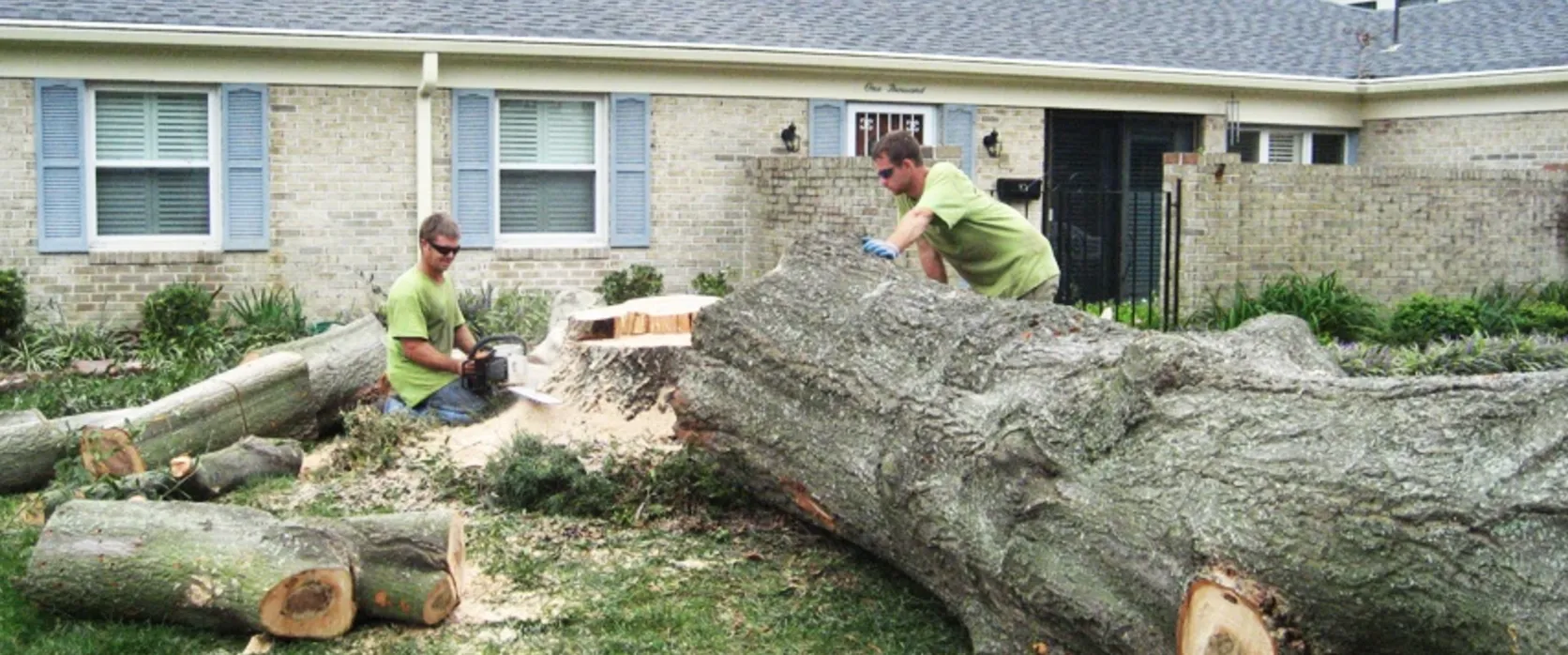
Tree Removal in Martinsville
Professional tree removal for Martinsville — managing rapid I-69 corridor growth alongside established neighborhood canopy.
$20 OFF Your Service
Submit the form to claim your discount. Mention this offer when we call to confirm your estimate. Valid for all Martinsville properties.
The Fastest Way to Get Your Quote
Submit the form and we'll dispatch an estimator to your Martinsville property — that's our promise.
It's easier for everyone. We might be up in your neighbor's tree. The form gets us your info so we can schedule your estimate right away.
Prefer to call? We're here at (812) 432-2013
Get Your Quote in 24 Hours
Fill this out and we'll send an estimator to your Martinsville property.
Martinsville Tree Removal in a Rapidly Growing Corridor
The completion of I-69 between Bloomington and Indianapolis transformed Martinsville from a quiet county seat into one of south-central Indiana's most active growth corridors. New residential subdivisions, commercial developments, and infrastructure projects are pushing into land that was heavily wooded just a few years ago. That growth generates a constant stream of tree removal work — some of it planned as part of development, and some of it reactive as preserved trees on newly developed lots begin to show stress.
Construction-related tree removal in the Martinsville area requires planning that goes beyond simply cutting down trees. Developers and builders want to preserve select trees for their value to finished lots — a mature red oak in the right location adds thousands of dollars to a property's appeal. But those preserved trees often suffer root zone damage during grading, utility trenching, and heavy equipment traffic. Within two to five years after construction, a preserved tree may begin declining rapidly, dropping canopy density, developing dead limbs, or leaning as compromised roots lose their hold. By that point, the tree is standing next to a completed house, and removal is more complex and more expensive than it would have been during the construction phase.
We work with both homeowners and builders in the Martinsville area on these post-construction failures. Our arborists can assess preserved trees that are showing signs of decline and give an honest prognosis — whether the tree can recover with care, or whether removal is the safer and more practical path. For builders still in the development phase, we can flag trees that are unlikely to survive the construction process so they can make informed decisions about which specimens are worth the investment of root zone protection.
The residential areas east and west of Martinsville proper are also experiencing steady growth, with new homes being built on wooded lots that require selective clearing. We handle this work with an eye toward preserving the trees that add the most value while efficiently removing the ones that conflict with the building footprint, septic field, or driveway alignment.
Hazard Trees Along the White River in Martinsville
The White River runs directly through Martinsville, and the river corridor supports some of the largest and most structurally problematic trees in Morgan County. Sycamores and cottonwoods dominate the immediate riverbank, and both species present removal challenges that are distinct from the upland hardwoods found elsewhere in the area.
Mature sycamores along the White River in Martinsville commonly reach 80 to 100 feet in height with trunk diameters of 30 inches or more. Sycamores are characteristically hollow — internal decay is essentially a normal part of this species' biology, not necessarily a sign of imminent failure. However, the combination of a hollow trunk, saturated floodplain soil, and the occasional ice loading event that Morgan County experiences can push a sycamore past its structural limits. When a large sycamore fails near the river, it typically uproots entirely, pulling up a massive root plate of saturated soil and stone.
Cottonwoods along the river are equally concerning. Cottonwood is one of the fastest-growing native hardwoods in Indiana, which means the wood is correspondingly soft and weak. Cottonwood branches break in moderate wind events that would not faze an oak or hickory. Large cottonwood limbs overhanging a deck, dock, or recreational area along the river are legitimate hazards that warrant removal even when the rest of the tree appears healthy.
Removing trees in Martinsville's river corridor involves the same floodplain considerations that apply in Spencer to the south. Soil conditions near the river are soft and saturated much of the year, which limits heavy equipment access. We evaluate ground conditions before every riverfront job and adjust our approach — sometimes using track-mounted equipment that distributes weight over a larger footprint, sometimes using climbing and rigging techniques that keep all heavy equipment on firm ground away from the river.
Properties in the floodplain may also be subject to local regulations regarding tree removal. We identify these requirements during our initial assessment and advise property owners on any coordination that may be needed before work begins.
Established Martinsville Neighborhoods and Mature Tree Removal
The historic core of Martinsville — the residential streets surrounding the Morgan County Courthouse and the older neighborhoods extending outward from downtown — has mature tree canopy that ranges from 50 to 80 years old. Sugar maple, red oak, white oak, and tulip poplar are the dominant species on these streets, and many individual trees have grown to impressive dimensions in the deep, fertile soils that characterize this part of Morgan County.
These established Martinsville neighborhoods face the same aging-canopy challenges as Bedford, Bloomington, and other regional communities with older tree plantings. Co-dominant stems with included bark, accumulating deadwood in upper canopies, root conflicts with aging infrastructure, and progressive internal decay are all standard findings when we assess mature trees in these areas. The difference in Martinsville is that the soil depth is generally greater than in the limestone bedrock areas to the south, which means root systems tend to be better developed — but also that uprooted trees pull up larger, heavier root plates when they do fail.
Silver maple is notably common in Martinsville's older residential areas. Silver maple was widely planted as a fast-growing shade tree throughout the mid-20th century, and those trees are now reaching the size where their structural weaknesses become serious liabilities. Silver maple has brittle wood, a strong tendency to develop included bark at major branch unions, and a growth habit that produces multiple co-dominant stems. These trees frequently shed large limbs during moderate storms and are one of the most common sources of emergency tree service calls in Morgan County.
For Martinsville property owners with silver maples that have developed structural problems, removal is often the most practical long-term solution. A large silver maple with multiple included bark unions and a history of limb failures is unlikely to become safer with pruning alone — the structural defects are inherent to the tree's architecture. We can assess your silver maples and give you a clear picture of the risk they carry and the options available, whether that is removal, risk-reduction pruning, or a cabling system to extend the tree's safe lifespan.
Tree Removal Costs and What to Expect in Martinsville
Martinsville sits about 35 minutes north of our Bloomington base along the I-69 corridor, and travel distance is one factor that property owners sometimes ask about when considering tree removal pricing. While travel time does factor into our scheduling, it does not dramatically inflate the cost of a Martinsville job. We serve Morgan County regularly and often schedule multiple jobs in the area on the same day, which keeps travel overhead manageable.
The primary cost drivers for tree removal in Martinsville are the same ones that apply throughout our service area: tree size, species, condition, proximity to structures and utilities, and access. A 40-foot silver maple in an open side yard with clear access is a different job — and a different price — than a 90-foot red oak leaning over a two-story house with power lines running through the canopy.
Multi-tree removals are common in Martinsville, particularly for property owners who have deferred tree work and now have several trees that need attention. We price multi-tree jobs as a package because setup, crew mobilization, and haul-away costs are shared across all the trees rather than duplicated for each one. If you have three silver maples that all need to come down, or a combination of dead ash snags and declining hardwoods, bundling the work into a single visit saves you money and reduces the disruption to your property.
Lot clearing for new construction has its own pricing structure based on acreage, tree density, whether stumps need to be ground or grubbed, and the end condition the builder requires. We provide detailed written proposals for clearing projects that break out each component so you know exactly what you are paying for. The I-69 growth corridor means clearing work in the Martinsville area is steady, and our crews are experienced at moving efficiently through these projects.
We provide free estimates for all residential and commercial tree removal in Martinsville. Our arborist will visit your property, assess every tree in question, and provide a written quote that holds for 30 days.
Martinsville's Choice for Professional Tree Removal
Bloomington Tree Service Pros brings ISA-certified expertise and full commercial insurance coverage to every tree removal we perform in Martinsville and Morgan County. Our arborists hold current ISA certification, our operations follow ANSI A300 tree care standards and ANSI Z133 safety standards, and every crew member is covered by both general liability and workers' compensation insurance. These credentials exist to protect you — the property owner — and to ensure the work is done correctly and safely.
Morgan County has its share of unlicensed tree cutters who operate without insurance, without certification, and without the equipment or training to handle complex removals safely. The price difference may look appealing on paper, but the risk difference is enormous. An uninsured operator who drops a limb on your roof or injures a worker on your property leaves you holding the financial liability. We carry our insurance for a reason, and we are happy to provide certificates of coverage before work begins.
For Martinsville property owners navigating insurance claims after storm damage, we provide the full documentation package — pre-work damage photos, written scope of work, and itemized final invoices — that adjusters need to process your claim efficiently. We are familiar with the documentation expectations of the major insurers serving Morgan County and can communicate directly with your adjuster if that helps move the process forward.
Whether you need a single hazard tree removed from a tight lot in downtown Martinsville, a post-construction assessment of preserved trees in a new subdivision, or lot clearing for a commercial development along the I-69 corridor, call us at (812) 432-2013 for a free estimate. We will give you an honest assessment, a clear plan, and a firm price.
Our Tree Removal Service Includes
- Full hazard assessment including lean, root plate health, and proximity to structures or utility lines
- Crane-assisted removal for trees in tight spaces, over structures, or with no clear drop zone
- Sectional rigging and lowering for controlled piece-by-piece removal near fences, cars, and landscaping
- Emerald ash borer snag removal using specialized protocols for brittle, unpredictable dead wood
- Complete stump grinding to 8–12 inches below grade included or quoted separately as needed
- Thorough debris cleanup — all wood, brush, and chips hauled away or left as mulch on request
- City of Bloomington and Monroe County permit coordination handled by our team
- Insurance documentation and photo evidence prepared for homeowner insurance claims
Other Tree Services in Martinsville
Need Tree Removal in Martinsville?
Fill out the form at the top of this page to claim your $20 discount and get a free on-site estimate from our ISA-certified team.